NO WIPE DIET

What is the “no-wipe” diet? I was vegan for a year then mostly vegetarian. I was raised by schools to think red meats and cholesterol is bad for the heart and probably can cause cancer. Eventually I raised my many children on broccoli, beans, lentils and brown rice and rarely gave them meats, For the many who follow the 1980’s trend “Fat Makes You Fat” you choose a strictly plant-based (“vegan”) diet and I see your motivations are noble: ethics, environment, animal welfare, or health. Yet, over time, I see some clients, friends and online individuals begin to notice subtle changes: more frequent gut disturbances, mood swings, brain fog, low energy, maybe even a sense that their body isn’t quite holding together the way it once did.
THE “NO-WIPE” DIET
Reviewing the clinical and nutritional literature, I found a consistent theme: plant-only diets can be very healthy, but they also place heavier demands on careful planning, supplementation and bio-availability of key nutrients. In one systematic review of adults consuming plant-based diets, intake and/or status of vitamin B12, D, iron (especially in women), zinc and iodine were “lower compared to meat‐containing diets, with an increased risk of inadequacy.” PMC+2PubMed+2 The same review noted non-heme iron, plant zinc, and plant-derived omega-3s (ALA) have lower absorption or conversion rates than the forms found in animal foods. PMC+1
For example, vegans frequently show lower B12 status: a review found a mean prevalence of B12 deficiency among vegans at 44%. PMC In another critical review of neurological health in plant-based diets, deficiencies in B12, DHA/EPA (omega-3s), iron and zinc were associated with increased risk of mood disturbances, cognitive decline and neurodegenerative conditions. PubMed On the gut side, lower intakes of bioavailable iron and zinc may impair gut mucosal health and immunity, and plant antinutrients (such as phytates, oxalates, lectins) may further limit absorption. For someone already prone to gut sensitivity or altered microbiome, this can translate into real symptoms. I write a bit about how this can also help HGH.
From the perspective of someone recovering from gut and mental-health distress, these nutrient shortfalls matter. Nutrients like vitamin B12 (essential for nerve/myelin health), iron (oxygen transport, energy metabolism), zinc (neurotransmitter synthesis, immune function), omega-3 fatty acids DHA/EPA (brain structure/function), and other nutrients such as creatine, taurine and choline (found abundantly in animal tissues) have unique roles that plants either do not supply in meaningful amounts or supply in less bioavailable forms. Many vegans therefore supplement, but the challenge remains: the body doesn’t always absorb or utilise plant‐derived forms in the same way, and this may increase the risk of fatigue, brain fog, low muscle tone, or gut issues.
By contrast, when my clients or friends introduce modest amounts of red meat (beef, lamb, not pork) into a high-quality diet, the nutrient picture changes. A recent study analysing over 3,600 adults, found that those with high Healthy Eating Index (HEI) scores who also consumed red meat had significantly higher adequacy of brain-health-critical micronutrients—vitamin B12, zinc, selenium, calcium, choline, iron—than those high-HEI but without red meat. PMC+1 This group exhibited greater gut microbiome diversity and lower odds of depression, bipolar disorder, homelessness, anxiety and PTSD. PubMed+1These data suggest red meat can serve as a useful and bioavailable nutrient vector for many people whose guts or brains may not thrive on purely plant‐based regimens.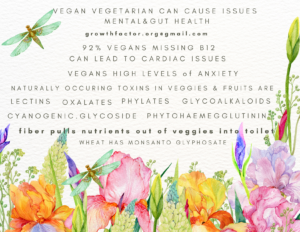
Let’s review what I mean by “THE NO-WIPE DIET” and which nutrients tend to be low in vegan diets, and which key nutrients red meat (and eggs more broadly) typically provide, highlighting their significance for gut and mental health:
Nutrients often low in vegan diets:
- Vitamin B12 (cobalamin) – absent from true plant foods unless fortified. PMC
- Iron (especially heme iron) – plant iron is non-heme, less absorbed. grassrootshealth.org
- Zinc – plant zinc uptake impaired by phytates/oxalates. PubMed
- Omega-3 fatty acids DHA/EPA – conversion of ALA to DHA/EPA is inefficient. PubMed
- Iodine – plant diets may lack iodine unless sea vegetables or iodised salt used. PMC
- Vitamin D – especially in higher latitudes or low sun exposure. PMC
- Choline – although found in plants, animal foods have more highly available forms.
- Creatine, taurine, carnosine – not essential nutrients in the strict sense, but abundant in animal tissues and may affect brain/gut function.
- Heme iron – animal form, more bioavailable.
- Bioavailability issues: antinutrients in plants (phytates, lectins, oxalates) can impair absorption of minerals. PMC
Nutrients found abundantly in red meat and eggs:
- Vitamin B12 – red meat and eggs are reliable sources. Integrative Healing Center
- Heme iron – red meat provides iron in a form the body absorbs more efficiently. Integrative Healing Center
- Zinc – red meat offers zinc with higher bioavailability; for example bioavailability from beef is about fourfold higher than from a high-fiber cereal. MLA Corporate
- Selenium – red meat provides selenium in bioavailable form. Greenpeace
- Choline – found in eggs and meat, supports neurotransmitter synthesis and cell membrane integrity.
- Creatine – red meat contains creatine (~350 mg/100 g muscle meat) which supports muscle and brain energy metabolism. Greenpeace
- Taurine and carnosine – found in muscle tissue, may support neurological/mood regulation (though research is less definitive).
- Long-chain omega-3s (to some extent) – while fish are the richest, certain meat cuts also provide beneficial fatty acids.
- Vitamin B6, niacin (B3), thiamine (B1) – red meat supplies a range of B vitamins in bioavailable form. Integrative Healing Center
From a gut health standpoint, a diet rich in bioavailable nutrients supports the integrity of the gut lining, immune cell maturation, microbial diversity, and metabolic signalling. The aforementioned study found that participants in the high-HEI with red meat group had higher microbial richness and favourable gut species compared to the high-HEI without red meat group—suggesting a link between red meat intake, nutrient adequacy and gut microbiome health. PMC+1 From a brain and mental-health standpoint, adequate B12, iron, zinc, selenium and choline are essential for myelination, neurotransmitter production, synaptic plasticity and mitochondrial function. Deficiencies or sub-optimal levels in these nutrients have been implicated in mood disorders, cognitive fog, fatigue, and in some studies, more serious mental‐health diagnoses. PubMed+1
Experts in nutrition and metabolic psychiatry have increasingly pointed toward nutrient sufficiency and metabolic health as foundational for mental and gut wellness. For instance, the psychiatrist Dr. Chris Palmer (Harvard Medical School affiliate) emphasises how metabolic dysfunction—glucose spikes, insulin resistance, altered fat metabolism—can drive mental-health pathology. While his work often focuses on ketogenic and low-carb diets, the underlying principle overlaps with nutrient adequacy and bioavailability. Although I did not locate a direct quote from Dr. Palmer on red meat specifically, his framework underscores the importance of physiological nourishment for brain health. Meanwhile, Dr. Ken Berry (a physician and author) has highlighted numerous case studies of individuals improving fatigue, gut symptoms and mood by re-introducing animal protein and reducing highly processed plant-based substitutes. Dr.
Leave a Reply