The word incurable carries a heavy weight. Once it is spoken, it often ends the conversation. It signals finality. It tells people to prepare, to manage, to accept decline. And for many, it quietly removes hope. But over the years, I’ve learned that incurable does not always mean what people think it means. Most of the time, it simply means, “We don’t know how to address the root cause.”
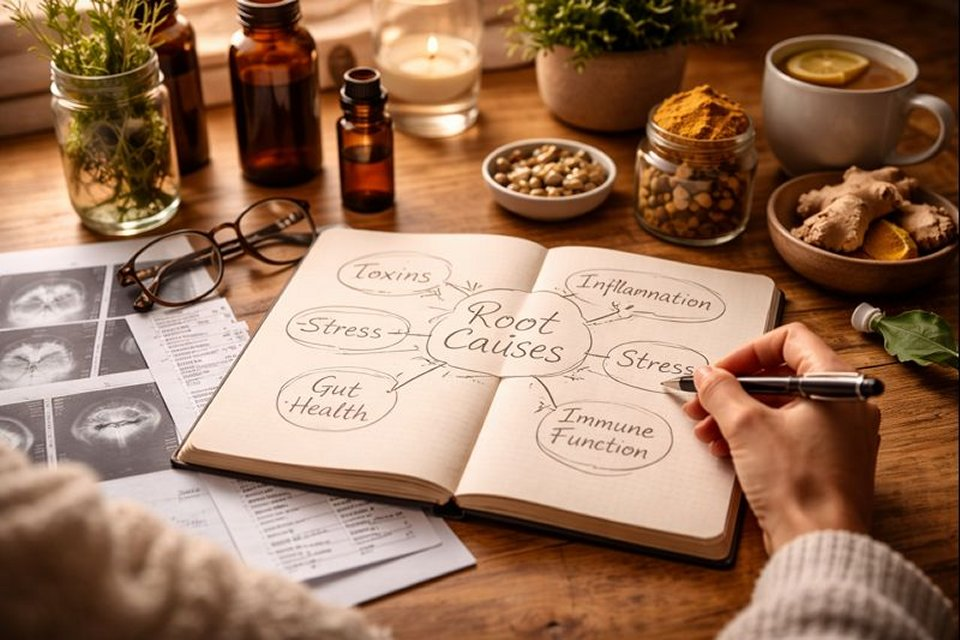
Modern medicine is very good at naming conditions. It is very good at categorizing symptoms. It is very good at suppressing what the body expresses when something is wrong. But it is far less interested in asking why the body arrived at that point in the first place—especially when the answer falls outside established protocols.
I have spent years studying cancer, autoimmune disease, neurological conditions, gut disorders, vaccine injury, and chronic illness. What I see over and over again is not a broken body, but an overwhelmed one. A body burdened by toxicity, inflammation, immune confusion, chronic stress, nutritional depletion, and unresolved trauma.
When those factors are ignored, disease progresses. When they are addressed, something remarkable sometimes happens.
The body responds.
This is why I hesitate when people tell me, “Nothing can be done.” I have seen too many situations where something could be done—once the conversation shifted from control to support.
Many so-called incurable diseases are labeled that way because they do not respond well to pharmaceutical management. Drugs are designed to target specific pathways. But chronic illness is rarely a single-pathway problem. It is layered. It is cumulative. And it often develops slowly over years.
When treatment focuses only on symptom suppression, the underlying imbalance remains.
This does not mean healing is easy or guaranteed. It does not mean everyone will experience the same outcome. Healing is complex, personal, and influenced by many factors—timing, environment, mindset, and willingness among them. But complexity does not equal impossibility.
I have watched people improve after being told they never would. I have seen children regain function. I have seen inflammation quiet, pain lessen, clarity return, and resilience rebuild. Not overnight. Not magically. But steadily.
What changes is not just what the person takes—it is how the body is supported.
Instead of asking, “What drug manages this?”
The better question is often, “What is overwhelming this body?”
When toxic load is reduced, when nutrition is restored, when the immune system is supported rather than suppressed, and when fear is replaced with understanding, the body often surprises us.
This is why I encourage people not to stop at a label.
A diagnosis can be useful, but it should never become an identity or a sentence. It is a starting point, not an ending. And when someone tells you something is incurable, what they are really saying is that they have reached the edge of their training.
That is not a condemnation. It is simply a limitation.
I don’t share this to give false hope. I share it to give informed hope. The kind that says: learn more, ask better questions, and don’t assume you’ve reached the end of the road just because someone else has.
The human body is remarkably intelligent. It is designed to heal, adapt, and recover when given the right conditions.
“Incurable” often means unexplored.
And exploration—done carefully, humbly, and responsibly—has changed more lives than most people realize.
Leave a Reply