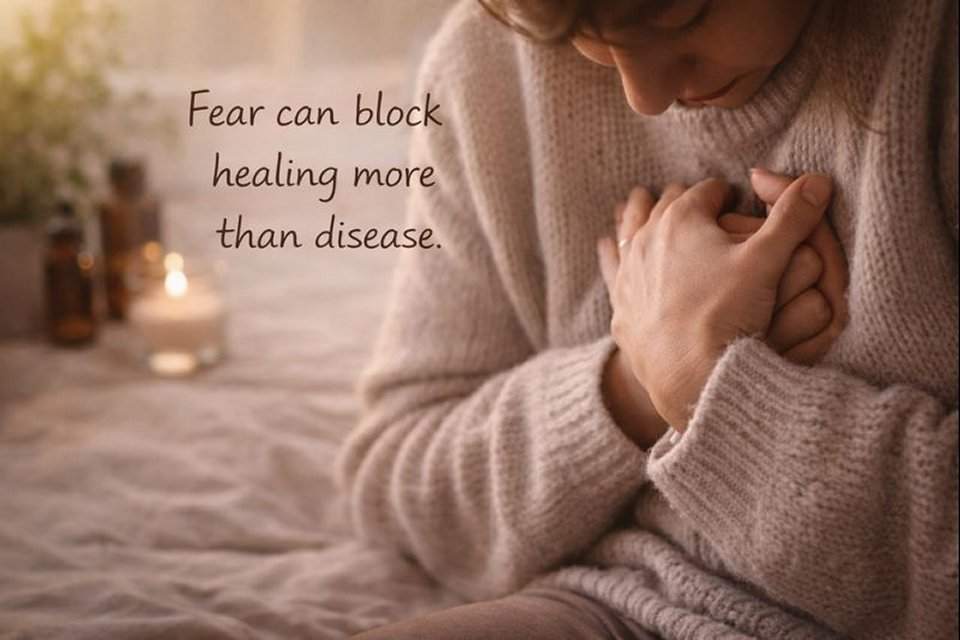
Fear changes the body long before disease ever does. I’ve watched it happen countless times. A diagnosis is given, and within moments, something shifts. Breathing becomes shallow. Muscles tighten. The mind begins racing toward worst-case scenarios. The body, sensing danger, moves into survival mode. That response is understandable—but it comes at a cost.
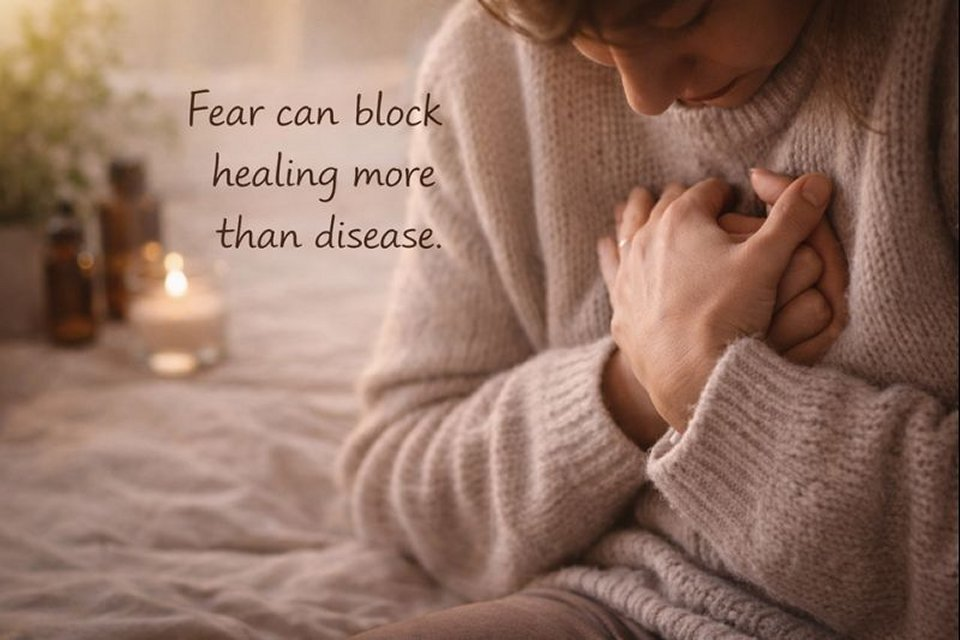
When fear takes hold, the nervous system prioritizes protection over repair. Digestion slows. Immune response becomes dysregulated. Inflammation increases. Sleep becomes fragmented. None of this happens because the person is weak. It happens because the body is responding exactly as it was designed to respond to threat.
The problem is that healing cannot happen in a constant state of alarm.
I am not suggesting that fear causes disease, or that people are responsible for their illness because they are afraid. That idea is both untrue and cruel. What I am saying is that prolonged fear can interfere with the body’s ability to recover once illness is present.
Many people are living in fear long before they ever get sick.
Fear of doing the wrong thing. Fear of asking the wrong questions. Fear of being judged. Fear of being abandoned by the system if they step outside its boundaries. Over time, that fear becomes a background noise—constant, exhausting, and invisible.
When illness arrives, that fear intensifies.
People are told what might happen, what usually happens, what to expect if nothing works. These conversations are often delivered without malice, but the impact is the same. Fear settles into the body, and the body responds by shutting down anything that isn’t essential for immediate survival.
Healing requires safety.
The body repairs itself when it senses stability. When breathing slows. When sleep deepens. When trust returns—even slightly. This is why people often experience improvement when they feel supported, listened to, and empowered. Not because encouragement cures disease, but because safety allows the body to shift out of defense.
I have seen people stabilize simply because they stopped feeling alone.
I have seen inflammation calm when fear was replaced with understanding. I have seen people regain clarity once they realized they were not out of options. These changes may look small, but they matter. They create the conditions where healing becomes possible.
Faith plays a role here as well.
Not as denial, and not as a guarantee—but as grounding. Belief in something larger than the diagnosis can soften fear’s grip. Trust in God’s presence can restore a sense of safety when nothing else feels certain. That calm does not erase illness, but it can reduce the internal chaos that makes healing harder.
Fear is not the enemy. It is a signal.
It tells us where support is needed. Where clarity is missing. Where reassurance has been replaced with overwhelm. When fear is acknowledged instead of ignored, it loses some of its power.
Healing does not require fearlessness.
It requires enough calm for the body to stop bracing for impact.
When fear eases—even a little—the body often responds. And in that space, healing has a chance to begin.
Leave a Reply